












7 ARTICLES ON INTEGRATION: FROM NEURAL PATHWAYS TO SOCIAL SYSTEMS - PATRICK TOMLINSON (2015 - 2026)
Date added: 20/02/26
Download a free PDF of the 7 Articles
INTRODUCTION
In 1985, I began work at the Cotswold Community, a residential therapeutic community in England. Often, the boys had suffered serious disruption to their development because of trauma and other adversities. The first concept I learned there was connected to child development. The primary task of the community was to enable emotionally 'unintegrated' boys to develop and achieve emotional integration.
The concept was derived from the work of Donald Winnicott (1945, 1962, 1963), a child psychoanalyst and pediatrician. I soon realized that the concept was more widely relevant. For example, the adults working therapeutically with the children also often went through a process of integration (Bettleheim, 1966, 1974), sometimes experiencing disintegration along the way. To provide an environment that can help heal unintegration, the organization must also integrate its functions and purpose.
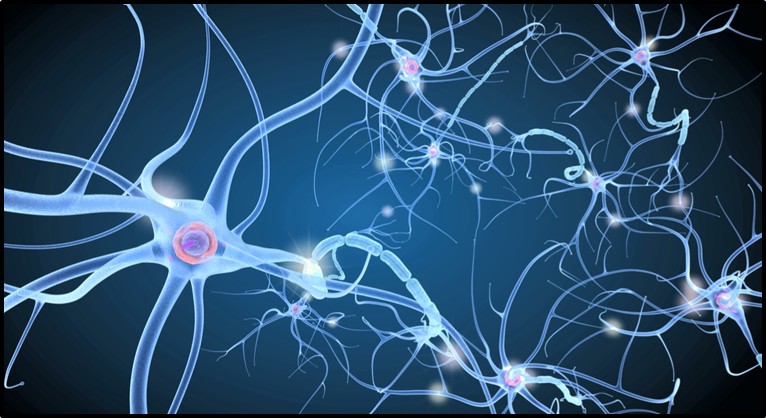
In recent years, integration has become a central concept within Neuroscience. Dan Siegel (2006), professor of psychiatry, says it is at the "Heart of Well-being". It is relevant to child development, recovery from trauma, therapeutic work, leadership, management, organizational culture, creativity and growth, communities, and society. I have put these articles together to provide focus on the vital and far-reaching importance of integration.
Since writing about integration, I have reflected on how it has become so central to my work. On the one hand, I stumbled across the job at Cotswold Community, which was my first since leaving Loughborough University with a Bachelor of Science Degree in social administration. I studied there from 1981 to 1984.
I discovered, forty years later, that the School of Social Sciences and Humanities at Loughborough was pioneering in the development of interdisciplinary courses. We studied social psychology, policy, economics, sociology, criminology, and social history. At the time, I found the approach interesting, but I had no real sense of how it was different. It was just the degree I happened to be studying, to some extent also by accident.
The way the subjects were integrated was unique and against the single academic discipline traditions. The approach to teaching and the research that took place alongside it had a national and global impact. Each of the academic disciplines was high-quality, but it was the quality of interdisciplinary integration that made the difference. It fostered a comprehensive understanding of social issues, addressing complex societal challenges through diverse perspectives.
Looking back, I can see how the idea of integration has not only been shaped by my early experience working in a therapeutic community but also reflects the interdisciplinary ethos of my education at Loughborough University. The seven articles that follow explore how integration unfolds at every human level, from neural networks to social systems.
CONTENTS
1. Integration and Connection in Well-Being and Recovery from Trauma
Patrick Tomlinson (2015), p.4
Focuses on integration and connection in individual well?being and trauma, introducing key ideas from Winnicott, Siegel, and others.
2. Integrating and Connecting – The Essence of Trauma Recovery Environments
Patrick Tomlinson (2015), p.10
Extends integration and connection to whole environments, exploring what makes trauma recovery systems integrate rather than fragment.
3. Integration in Leadership and Management
Patrick Tomlinson (2015), p.16
Looks at integration in leadership and management, including common “splits” and how to work with them.
4. Why We All Need an Integration Agenda
Patrick Tomlinson (2015), p.20
Makes the case for an “integration agenda” across services, communities, and society.
5. Why Integration and Connection are so Important in Well-being and the Healing of Trauma Patrick Tomlinson (2018), p.25
Revisits integration and connection in well?being and trauma healing, updating and deepening the ideas.
6. Professional and Personal Development: Disintegration and Reintegration
Patrick Tomlinson (2016, Revised 2026), p.31
Explores how the emotional aspect of working with trauma can impact the worker, causing pain and distress, but also an opportunity for development.
7. Organization Integration, Disintegration, and Recovery
Patrick Tomlinson (2020, revised 2026), p.40
Applies integration and disintegration to organizational life, including stages of development and recovery.
Files
Please leave a comment
Next Steps - If you have a question please use the button below. If you would like to find out more
or discuss a particular requirement with Patrick, please book a free exploratory meeting
Ask a question or
Book a free meeting