












A FEW SLIDES ON TOXIC NOURISHMENT BY MICHAEL EIGEN (1999) – PATRICK TOMLINSON (2026)
Date added: 27/01/26
I came across this book by the psychoanalyst Michael Eigen, not long after it was published in 1999. It was impactful on me and is one of those books that has stayed with me. The way that Michael Eigen captures toxic nourishment is illuminating. I have created a set of slides on the subject and hope you find it an interesting introduction.
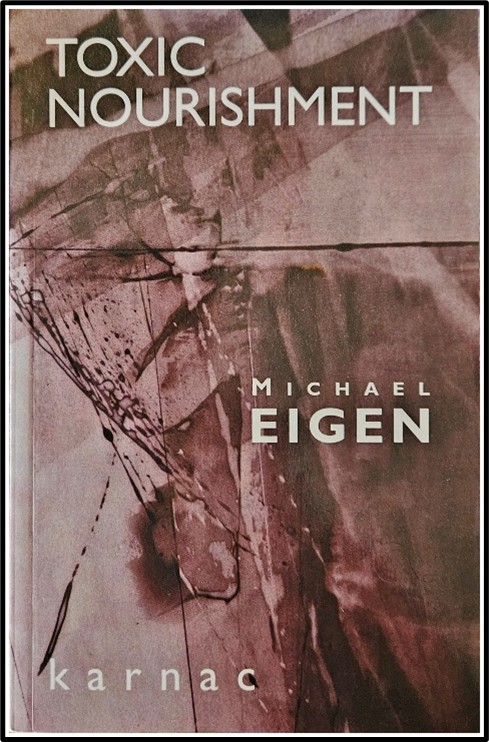
The concept of Toxic Nourishment is real and practical, not just in therapy, but across life and work. It moves us beyond the reductionist way of thinking and towards being able to hold ambivalence. Eigen's Toxic Nourishment is a sophisticated psychoanalytic concept that moves far beyond typical therapeutic framing. Rather than binary thinking (good vs. bad, healthy vs. unhealthy).
In 2010, I saw the documentary movie Waste Land. This is a great representation of Toxic Nourishment in both literal and symbolic senses.
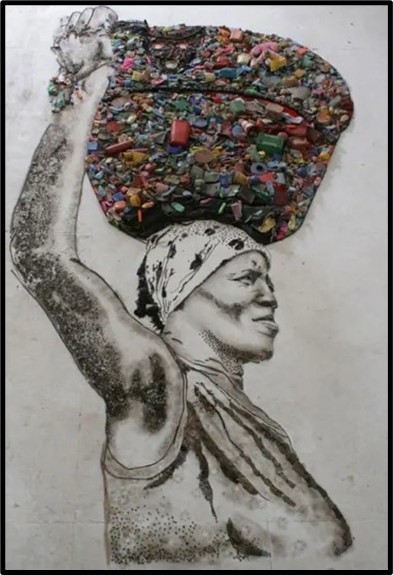
The movie follows the American Brazilian artist, Vik Muniz, as he travels to the world's largest landfill, just outside Rio de Janeiro, to collaborate with a lively group of "catadores" (workers who salvage recyclable materials from the garbage). The collaboration produces great art incorporating some of the picked refuge. The success of the project, the documentary, and the art produced was transformative. It is a moving testimony to human potential in the least expected circumstances.
Eigen articulates the paradox that: We are simultaneously nourished and contaminated by the same experiences. Destructive activities can heighten our sense of aliveness. What poisons us can nourish us—and vice versa. This is precisely the kind of ambivalence-holding that clinical wisdom demands but rarely articulates clearly.
In therapeutic work with traumatized children, we encounter this constantly:
• The attachment figure who simultaneously damages and sustains.
• The survival strategies that protect but also harm.
• The staff members, whose strengths and liabilities are inseparable.
• The child whose resilience and self-protective aggression are entwined
This isn't abstract theory—it's the lived reality of the work. The same types of paradox can be found in any kind of human relationship. For example,
• Control that provides safety also restricts and inhibits.
• Love that suffocates.
• Care that creates dependency.
• Pain that leads to growth or harm.
• Risk that leads to opportunity and danger.
• Trigger warnings that create anxiety.
Eigen’s work grounds itself in serious psychoanalytic tradition (Freud, Melanie Klein, Bion, Winnicott). His invocation of Bion's Transformations observation about well-being arising from the same characteristics that create trouble carries real weight. This has something in common with the concept of the wounded healer. Where one’s suffering becomes a gift.
Files
Please leave a comment
Next Steps - If you have a question please use the button below. If you would like to find out more
or discuss a particular requirement with Patrick, please book a free exploratory meeting
Ask a question or
Book a free meeting