












MIND THE GAP: FINDING THE RIGHT SPEED FOR GROWTH IN PEOPLE AND ORGANIZATIONS - PATRICK TOMLINSON (2026)
Date added: 24/02/26
Download a free PDF of this Article
 Introduction
Throughout my work, whether in services for children and young people who have suffered trauma, in leadership roles, or as a consultant focused on professional and organizational development, the speed of the development process is always a central issue, whether it be a team change, service redesign, or a child’s development plan.
Edwin H. Friedman (1999), who was a rabbi, family therapist, and organizational consultant, made an important point: all human systems, and leaders from families to presidents, have features of behaviour and processes that are common to all living human systems. This is true from the individual, even cellular activity, to all other forms of larger systems. Pacing change and development is one such universal issue in all walks of life and work. This article outlines a practical framework leaders can use to judge when to slow down, speed up, or hold steady.
The right speed cannot be known in advance but must be worked out between those involved, and it must continuously adapt and evolve through careful observation of how things are going. At different times, it may be necessary to slow down, speed up, or stop. These developmental processes are universal to individuals, groups, organizations, and societies, though cultural differences influence what is considered a “normal” speed of change and development.
Optimal Rates of Growth
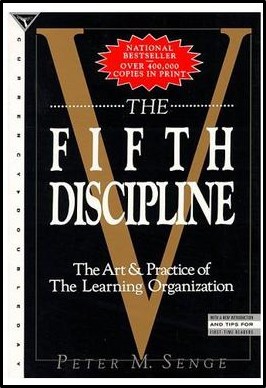 Peter Senge (1990) referred to ‘optimal rates of growth’ in his business classic, The Fifth Discipline: The Art & Practice of the Learning Organization. In 1997, Harvard Business Review identified this as one of the seminal management books of the previous 75 years. He argues,
Virtually all natural systems, from ecosystems to animals to organizations, have intrinsically optimal rates of growth. The optimal rate is far less than the fastest possible growth. When growth becomes excessive … the system itself will seek to compensate by slowing down; perhaps putting the organization’s survival at risk in the process.
Finding the optimal rate of growth takes time and understanding. Children develop at different rates, as do adults. There may be spurts of growth and then plateaus, or even regressions, followed by another spurt of growth. Constitutional and environmental factors, as well as life events, influence the pattern of growth. The environment includes the parents, siblings, and wider family, friends, teachers, and others involved with the child. For adults, work colleagues and other professionals become important. Having others who know us well is a great help and a necessity to help us work out our optimal rate of growth.
For example, a teacher told me about a child, “It doesn’t work to show him how to get from A to B; you have to be alongside him while he finds his own way”. Trying to go too quickly to solve the problem would only slow things down due to the resistance. The same pattern can be seen in teams and organizations, for example, when new practice models are introduced in services.
We all have our own approach, and sometimes, without the help of another, we may not manage our speed very well. With someone alongside us, such as our manager or a coach, if the relationship is tuned in and attentive, we are likely to find the right speed. The process is never static, and we must continuously adapt to changes in ourselves and our lives at home and work.
Individual change is not as complex as team change. The speed of the team, whether a small team or a whole organization, must take into account the complex variety of components involved. One person or part of an organization may be ready to move quickly, but others may not be. The right speed for one person may not be right for others. When we talk about the difficulties of managing change, often the key factor is the speed of change and development.
Slow Down to go Fast
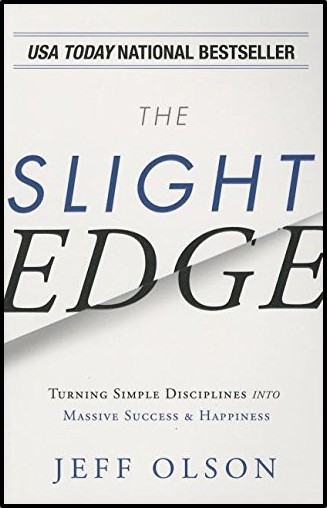 Jeff Olson, in his book on development, The Slight Edge (2013, p.206), states,
There’s a reason I titled an earlier chapter “Slow Down to Go Fast.” The Aesop fable was dead-on accurate: fast is not always optimal and often does not win the race.
Like Senge, he points out the risk to survival of going too fast (p.206).
Going too fast, or growing too fast, often puts the system’s (or the person’s) survival at risk. Faster can easily turn out to be slower.
In the fast-changing world that many of us live in, the issue of speed becomes increasingly significant. In some instances, for example, in a competitive industry, if we are not quick enough, we get overtaken with potentially serious consequences. At the same time, we may become too reactive, fail to think things through carefully, and it can feel like we are crashing from one bump or crisis to another. For instance, when a team implements a new recording system too quickly and then has to reverse and redo it. A slower and steadier approach may not only progress quicker but also with fewer setbacks and casualties along the way.
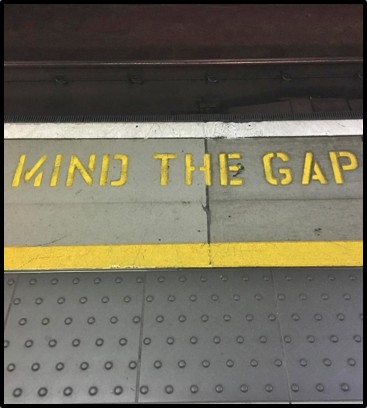
Mind the Gap
For optimal development, the speed of change and development should not be too comfortable but not excessively demanding. It is important that we are as aware as possible of the gap between where a person, group, or organization is currently and their potential capability, so that we can mind and bridge the gap. The bigger the gap, the more we need to mind it. For example, a small child needs a lot of minding. A gap is necessary for growth. The question is the size of the gap, giving room to grow but not so big that the situation is overwhelming and potentially unsafe.
For example, if one is taking up a new leadership role, we may see many issues that need to be worked on and improved. It may seem overwhelming and a huge task. If we make a realistic assessment, we may think in stages. Where we wish to get to may be a three-year journey, but we break it down into bite-sized pieces. We do that for ourselves and for everyone who is involved. We need to measure progress and look for indicators that we are moving along at the right speed.
Vygotsky’s Zone of Proximal Development
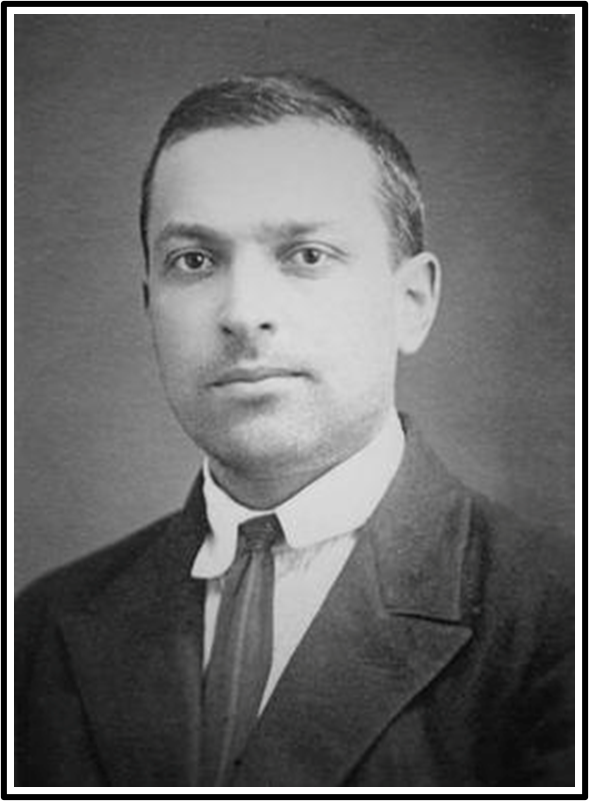
This ‘gap’ is captured well by the Russian psychologist Lev Vygotsky’s (1978) concept of the ‘Zone of Proximal Development (ZPD)’, or how the person can function on their own compared to how they could function with the input of others.
Scaffolding Development
The support necessary to enable the person to move from where they are now to where they could be, Vygotsky termed ‘scaffolding’. The same concepts can be applied to the development of individuals, groups, and organizations.
ZPD - Development & Scaffolding
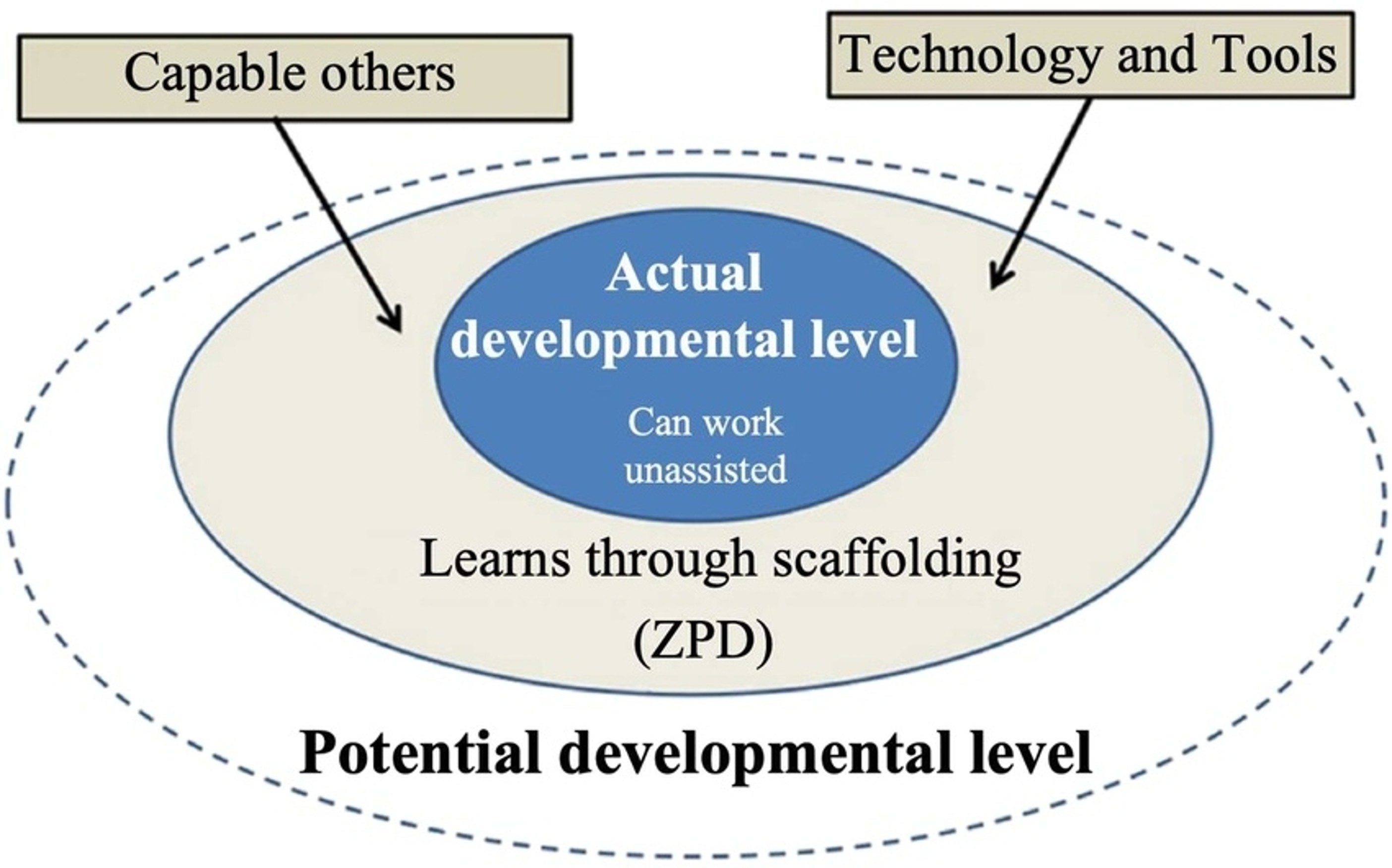
This diagram shows how the quality of scaffolding combines capable others along with technology and tools. The stronger the scaffolding, the more significant the growth and development is likely to be, though there are always limits as to what is possible. Scaffolding includes,
- The quality of relationships in the situation, such as line management, team meetings, 1-1 coaching, mentoring, peer support, etc. The right frequency of these processes is part of the quality, and as with finding the right speed.
- The psychological elements of scaffolding include matters such as emotional availability and containment, and clarity of role, alongside the more practical relational elements.
- The resources available, tools and technology, and anything that helps people with their tasks. For example, good-quality paints and brushes help with painting.
The scaffolding is the key element in the Zone of Proximal Development.
The Most Productive Learning Takes Place in ZPD (Tabor, 2020)
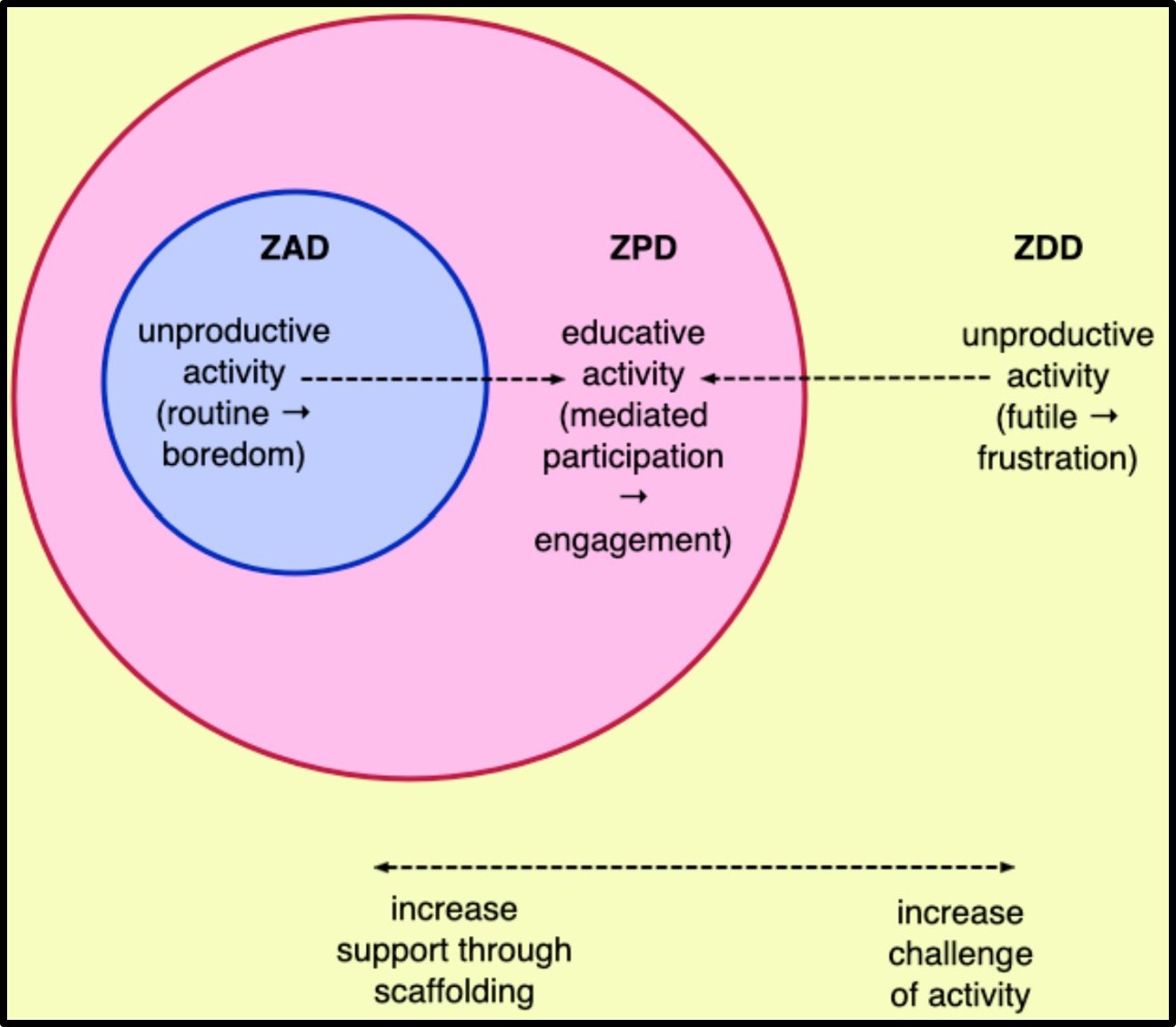
This diagram shows how an increase in support through scaffolding can stretch the ZPD and increase the capacity for challenging work.
ZAD - Zone of Actual Development is what the person can already do independently, without any help. The gap is too small.
ZDD - Zone of Distal Development is where the demands are too far beyond the person’s current capability, even with support. Activity here tends to be futile and frustrating; the gap is too big, so the experience becomes overwhelming rather than developmental.
Key Takeaways
- Growth requires a gap – but the gap must be optimal, not overwhelming.
- Faster is not always better – sometimes we need to slow down to go fast or go backwards to go forward.
- Mind the gap – provide scaffolding that matches the person's or organization's current capacity.
Questions for Reflection
- Where is the gap between current and potential capability?
- Is the speed of change optimal or overwhelming?
- What scaffolding is needed to support growth?
- Are we slowing down enough to go fast later?
Applying to Your Context
- What changes are currently underway in your team or organization?
- Who might be in their zone of proximal development right now?
- Where might we be going too fast and risking the system?
REFERENCES
Friedman, E.H. (1999) A Failure of Nerve: Leadership in the Age of the Quick Fix, New York: Church Publishing, Inc.
Olson, J. (2013) The Slight Edge: Turning Simple Discipline into Massive Success & Happiness, Austin, Texas: Greenleaf Book Group Press
Senge, P.M. (1990) The Fifth Discipline: The Art and Practice of the Learning Organization, Currency: Random House
Taber, K. S. (2020) Mediated Learning Leading Development – The Social Development Theory of Lev Vygotsky, in, B. Akpan & T. Kennedy (Eds.), Science Education in Theory and Practice: An Introductory Guide to Learning Theory, Springer
Vygotsky, L.S. (1978) Mind and Society: The Development of Higher Psychological Processes, Cambridge, MA: Harvard University Press
Files
Please leave a comment
Next Steps - If you have a question please use the button below. If you would like to find out more
or discuss a particular requirement with Patrick, please book a free exploratory meeting
Ask a question or
Book a free meeting